.webp?width=600&height=150&name=Pennington%20Choices%20Logo%20(reduced).webp)
.png)

Speak to our team
Looking for support with ensuring the safety and compliance of your buildings? Get in touch with our team of experts.

Stay connected
Share this article


Last updated: 17th February 2026
The Government has published its response to the consultation on reforming the Decent Homes Standard (DHS). This marks the first substantive update to the standard since 2006 and, for the first time, confirms that it will apply consistently across both social housing and the private rented sector in England.
Following the Government's response, the Chartered Institute of Housing has issued guidance on the new Decent Homes Standard, covering the changes being made to each criterion, best practice guidance, and information on implementation. You can access the guidance document here.
The revised DHS is intended to reflect modern expectations of housing quality, safety, energy efficiency and resident wellbeing. While full compliance will not be legally required until 2035 at the latest, the substance of the reforms largely mirror existing statutory and regulatory duties. In practice, this means many landlords and housing providers should already be working towards these outcomes through their asset management, compliance and investment planning frameworks.
Rather than introducing a rigid, prescriptive checklist, the reformed standard establishes a clearer, more outcome-focused definition of what a “decent” home looks like. It shifts emphasis away from age-based measures and arbitrary thresholds, towards condition, performance, safety and usability.
The standard is structured around five core criteria, each of which is summarised below, alongside the practical implications for landlords and housing professionals.
Criterion A – Free from the Most Dangerous Hazards
Homes must be free from Category 1 hazards as defined by the Housing Health and Safety Rating System (HHSRS). These represent the most serious risks to health and safety, including fire hazards, excess cold, electrical risks, and structural instability.
While this reflects long-standing legal obligations, embedding the requirement directly within the DHS reinforces a clear principle: a home cannot be considered decent if it presents a serious and unmanaged safety risk. The focus is not simply on compliance, but on the effective management of risk.
For landlords and providers, this underlines the importance of robust inspection regimes, clear prioritisation of repairs, and strong contractor management arrangements. In the private rented sector, local authority enforcement remains central, while registered providers will continue to operate within the regulatory framework of the Regulator of Social Housing.
Criterion B – A Reasonable State of Repair
The revised DHS removes age-based triggers for components such as kitchens and bathrooms. Instead, compliance is assessed on actual condition and performance.
A home will fail this criterion where:
- One or more key components are not in reasonable repair; or
- Two or more other components are in poor condition
Key components include roofs, external walls, windows, heating systems, kitchens, bathrooms, and core services. The emphasis is on whether components are functioning safely and reliably, rather than how long they have been installed.
This approach aligns more closely with modern asset management practice. It reinforces the importance of accurate, consistent stock condition data and structured survey methodologies. Investment planning should increasingly be driven by performance, risk and condition, rather than lifecycle assumptions alone. This supports better targeting of capital investment and avoids unnecessary replacement where assets remain fit for purpose.
Criterion C – Core Facilities and Services
Criterion C focuses on whether a home provides the basic facilities and services needed for safe and reasonable day-to-day living. The assessment is based on usability, layout and safety, rather than age or specification.
Requirements include access to:
- A kitchen with adequate space and layout.
- An appropriately located bathroom and WC.
- Reasonable external noise insulation.
- In blocks of flats, suitably designed and maintained common areas.
Flats must meet at least three of these requirements, while houses must meet at least two. In addition, windows that present a fall risk to children must be fitted with appropriate safety restrictors.
The emphasis on usability and safety may require providers to review layouts, shared spaces, and safety features in older stock, particularly where design standards no longer reflect current expectations.
Criterion D – Thermal Comfort
Thermal comfort is now a central element of what defines a decent home. This reflects wider policy objectives around fuel poverty, affordability, energy efficiency, and carbon reduction.
Homes must have:
- A fixed and controllable heating system capable of heating the whole dwelling
- Compliance with Minimum Energy Efficiency Standards (MEES), subject to future regulations, exemptions and cost caps
Energy performance is now embedded within the definition of decency, rather than treated as a separate compliance area. This has clear implications for long-term investment strategies, retrofit programmes, heating replacement policies, and fabric improvement works.
For landlords, this reinforces the value of integrated planning, aligning energy efficiency improvements with planned maintenance cycles to deliver value for money, reduce disruption, and maximise the impact of investment.
Criterion E – Free from Damp and Mould
The introduction of a dedicated damp and mould criterion reflects increased regulatory, political, and public focus on housing conditions and health outcomes.
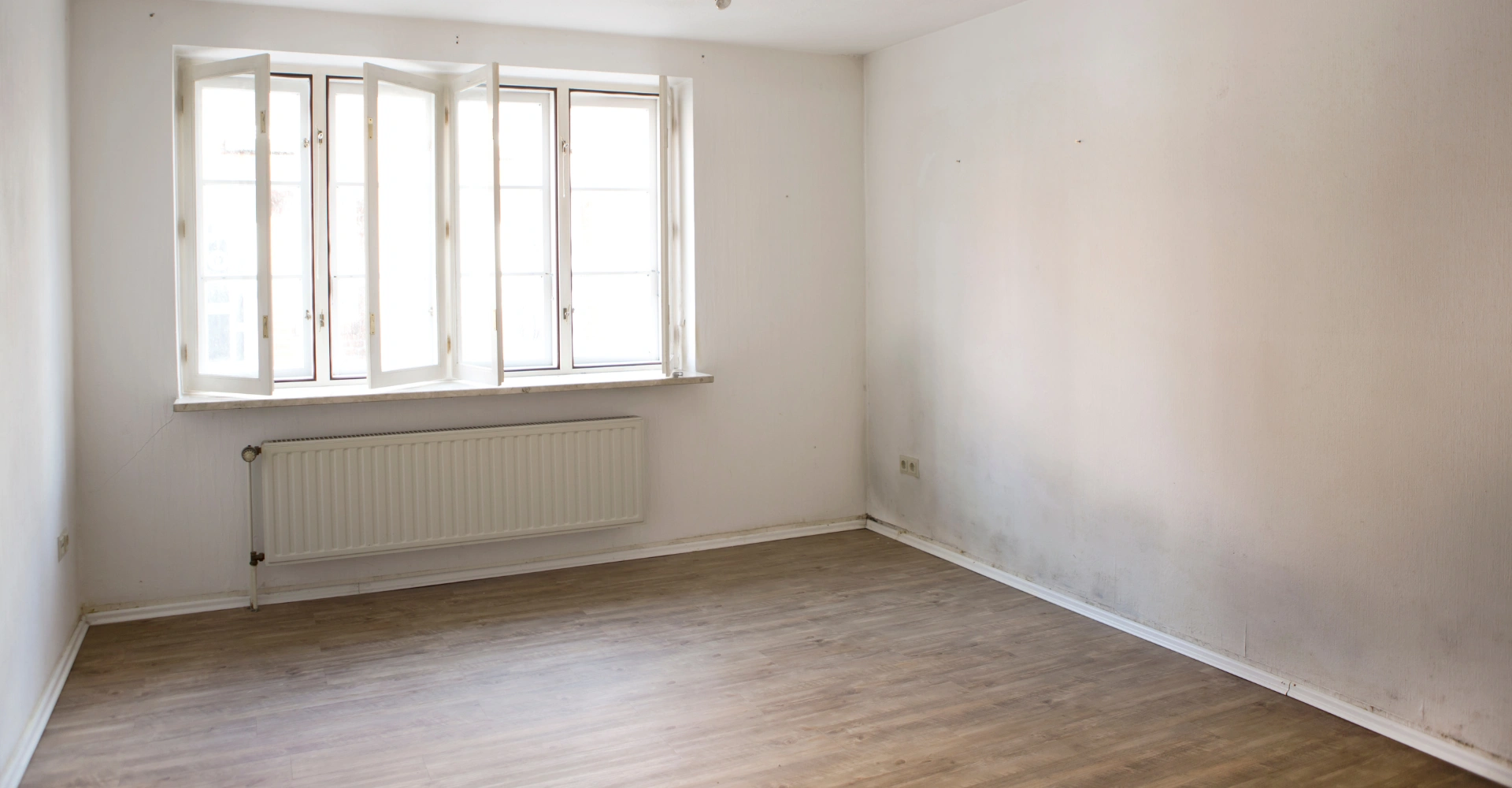
Homes must be free from damp and mould hazards that pose a risk to occupants. The expectation is not limited to reactive repairs, but extends to proactive identification, prevention, and long-term remediation of underlying causes.
This aligns closely with emerging requirements under Awaab’s Law and reinforces the need for consistent inspection regimes, effective diagnosis of moisture risks, and clear resident communication. Ventilation performance, heating provision, and building fabric condition all play a critical role in managing condensation and damp.
Robust data capture, audit trails and clear remediation plans will be essential in demonstrating compliance and effective risk management.
Floor Coverings: What the Government Decided
The consultation specifically asked whether the DHS should require landlords to provide suitable floor coverings (such as carpets, vinyl, tile, or other finished floors) at the start of every new tenancy.
The Government’s response confirmed that:
- There will be no specific DHS requirement to provide floor coverings
- Consultation responses indicated that around 82% of private rented landlords already provide suitable floor coverings in all rooms in new tenancies
- Due to uncertainty around cost, operational impact and practical implementation, a mandatory requirement will not be introduced
Concerns raised by landlords included potential increases in void periods, installation and replacement cycles, cost implications, and reduced tenant choice.
In practice, while the DHS will not mandate floor coverings, provision of flooring remains common practice in the private rented sector, and local expectations, contractual arrangements, and market norms will continue to shape how properties are presented at the start of tenancies.
Implementation and Forward Planning
The Government has confirmed that all rented homes must meet the full DHS by 2035 at the latest. Further technical guidance is expected to clarify assessment methodologies, exemptions, and enforcement arrangements.
Although the implementation timeline is long, many of the requirements already exist under current statutory and regulatory frameworks, including fitness for human habitation duties, hazard management, MEES, and damp and mould obligations.
Good compliance practice means integrating DHS expectations into ongoing asset strategies and investment planning now, rather than treating the standard as a future standalone exercise. Early alignment supports clearer prioritisation of risk, better financial planning and more efficient programme delivery.
The Government’s response signals a shift towards a more consistent, evidence-led and outcomes-focused definition of housing quality. The revised Decent Homes Standard moves away from prescriptive, age-based rules and towards a framework built around safety, condition, usability, thermal comfort and health outcomes.
For landlords and housing professionals, the focus will increasingly be on the quality of stock data, the robustness of survey intelligence and the integration of compliance, asset management, and investment planning.
While the formal compliance deadline sits in the future, the direction of travel is clear. Early alignment with the revised standard will support more efficient regulation, stronger governance, and better long-term outcomes for residents and organisations alike.
Looking for support in preparing your organisations for complience and the revised Decent Homes Standard?
Reach out to get in touch with our team of experts
for support with complience.
